Review: Cute Animals Act Professionals Freebie
As a designer who has spent years digitizing and testing machine embroidery designs, I have developed a keen eye for what works on fabric versus what merely looks good on a screen. When I first encountered the Cute Animals Act Professionals Freebie, my initial reaction was one of cautious optimism. We all know that freebies can be hit or miss—sometimes they are teaser files with limited utility, and other times they are genuine gems offered by generous creators to build community trust. This particular design falls into the latter category, offering a whimsical yet structured aesthetic that holds up surprisingly well under the needle.
First Impressions and Visual Personality
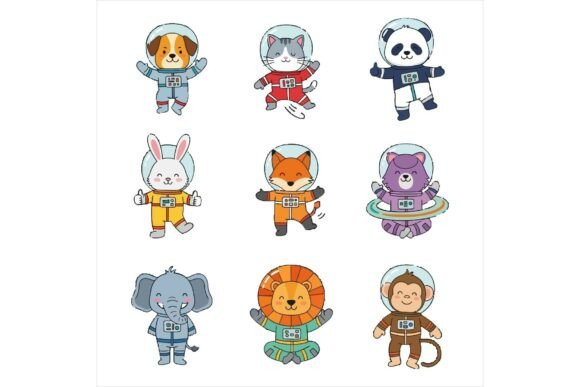
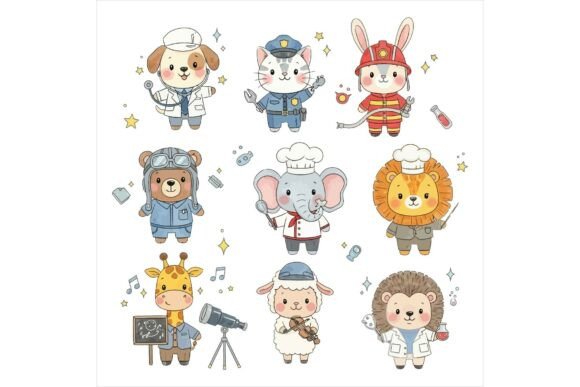
The immediate mood created by this design is playful professionalism. It strikes a delicate balance between childish charm and adult humor, which is a difficult niche to capture in embroidery. The layout features anthropomorphic animals dressed in occupational attire, rendered with clean lines and distinct character poses. From a technical standpoint, the visual personality relies heavily on clear silhouettes. In embroidery, clarity is king. If the shapes blur together after stitching, the joke is lost, and the design fails.
What stands out here is the thoughtful use of negative space. The design does not appear overly dense, which suggests a moderate stitch density that should behave well on various fabric textures. The theme is versatile enough to appeal to a wide demographic, from teachers and nurses to office workers who appreciate a touch of levity in their wardrobe. This broad appeal makes it a strong candidate for commercial embroidery projects where you need a design that resonates with multiple customer segments.
Real-World Application: The Tote Bag Test
To truly evaluate a design, you must imagine it in a real-life scenario. I recently considered using this file for a custom embroidered tote bag intended for a local craft fair. The goal was to create a handmade product that felt high-quality but remained affordable. I chose a sturdy cotton canvas for the base, knowing that its tight weave would support the stitches without puckering.
The result was impressive. The embroidery file translated beautifully onto the textured surface. The satin stitch elements used for the animals' uniforms provided a nice sheen that contrasted well with the matte fill stitch areas of the background. Customers at the fair were drawn to the humor and the crispness of the stitching. It proved that this design is not just a novelty; it has the structural integrity to serve as a focal point on a functional item. Whether applied to a tote bag design or a kitchen towel, the visual impact remains consistent.
Performance Across Different Products
Beyond tote bags, I see significant potential for this design in custom apparel. Imagine a sweatshirt embroidery project where the design is placed on the left chest area. The scale seems appropriate for this placement, avoiding the bulkiness that often plagues larger designs on curved surfaces like shoulders. For baby embroidery, however, caution is advised. While the subject matter is cute, the detail level might be too intricate for tiny onesies unless scaled down significantly, which could compromise stitch clarity.
For Etsy sellers and small shop owners, this freebie offers a low-risk way to test market interest. You can create printable mockup previews to gauge engagement before committing to large production runs. It works exceptionally well for personalized gift items, such as mugs with embroidered cozies or aprons for professionals who love their jobs. The holiday embroidery angle is also viable; think of these characters as part of a "Back to School" or "Teacher Appreciation" collection. The versatility allows it to fit into various seasonal marketing campaigns without feeling forced.
Technical Considerations and Fabric Choices
While the design is robust, it is not without its technical demands. When working with stretchy fabrics, such as those used in t-shirts or caps, proper stabilization is non-negotiable. I recommend using a cut-away stabilizer for garments that will undergo frequent washing to prevent distortion over time. On dark fabric, the thread color contrast becomes critical. You must ensure that the outline stitches are bright enough to define the shape against the background. A poor color choice can cause the details to vanish, turning a charming professional animal into an undefined blob.
Curved surfaces, like baseball caps, require careful hooping. The hoop size must accommodate the design without stretching the fabric too tightly, which can lead to needle breaks or thread tension issues. I advise testing the design on scrap fabric first, ideally in both light and dark colors, to verify how the stitch density interacts with the material. If you notice pulling or puckering, consider reducing the density in your editing software if the file format allows, or switch to a heavier stabilizer.
Commercial Viability and Brand Consistency
For creative entrepreneurs, the value of a design extends beyond its aesthetic. It affects brand consistency and customer trust. Using a high-quality digital embroidery file like this one signals professionalism. It shows that you care about the finished product, not just the speed of production. When customers receive a finished product with clean, well-executed stitches, they are more likely to return and recommend your shop.
However, always verify the licensing terms. Since this is a Freebie, the rules for commercial use may vary. Some creators allow unlimited sales of physical items, while others restrict digital redistribution or require attribution. Before listing any small shop product featuring this design, confirm that you have the right to use it in commercial embroidery. This due diligence protects your business and respects the original artist's work.
Final Designer Notes
- Test First: Always stitch a sample on similar fabric to check for tension and density issues.
- Color Contrast: Use high-contrast thread colors for dark fabrics to maintain detail visibility.
- Stabilizer Choice: Match the stabilizer to the fabric weight and stretch; cut-away for knits, tear-away for wovens.
- Scale Appropriately: Ensure the design fits the intended hoop size without overcrowding the garment.
- Check Licensing: Confirm commercial rights before selling items made with this freebie.
In conclusion, the Cute Animals Act Professionals Freebie is a solid addition to any embroiderer’s library. It offers a blend of humor and technical reliability that makes it suitable for a wide range of projects, from embroidered patches to boutique apparel. By paying attention to fabric choice, stabilization, and thread selection, you can elevate this simple free file into a premium-looking asset for your craft business.